Kia Sportage: General Information
Specifications
Specifications
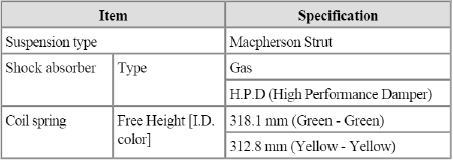
Front Suspension
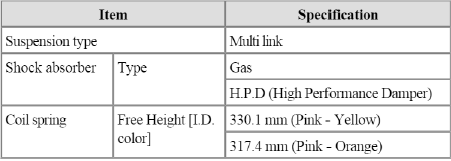
Rear Suspension
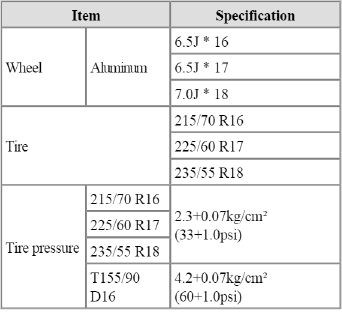
Wheel & Tire
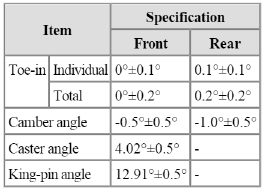
Wheel Alignment
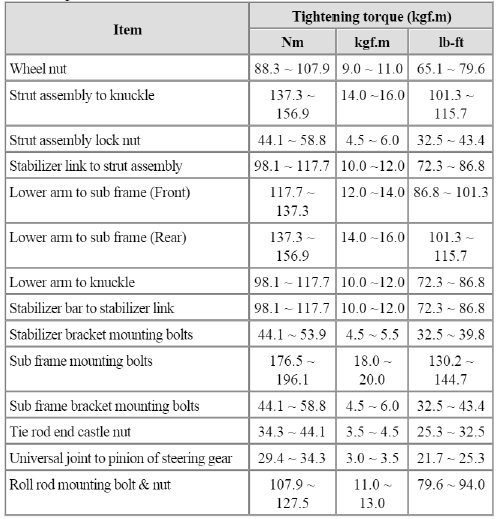
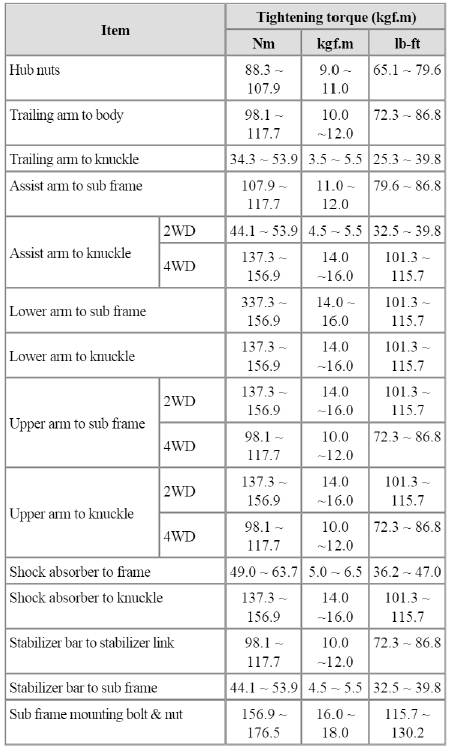
Tightening torque
Front Suspension
Rear Suspension
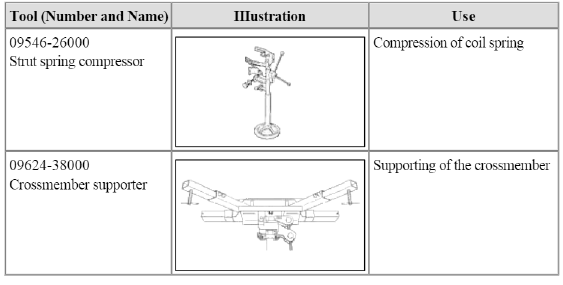
Special Service Tools
Special Service Tools
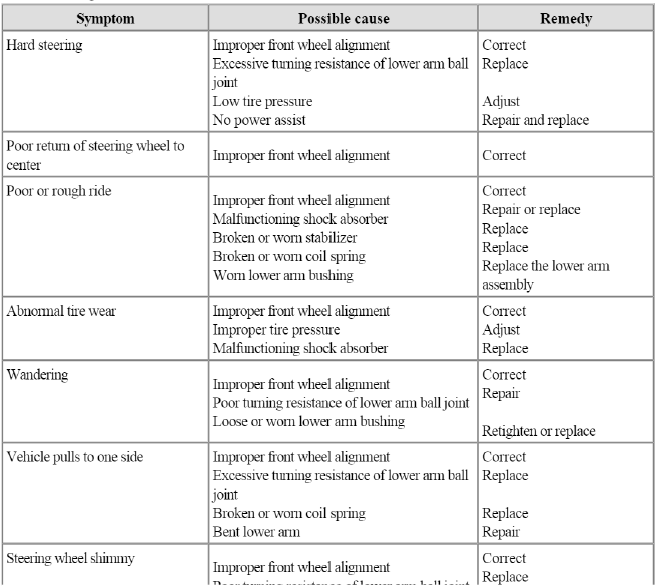
Troubleshooting
Troubleshooting
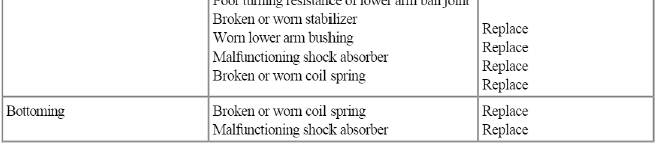
Wheel/tire noise, vibration and harshness concerns are directly related to vehicle speed and are not generally affected by acceleration, coasting or decelerating. Also, out-of-balance wheel and tires can vibrate at more than one speed. A vibration that is affected by the engine rpm, or is eliminated by placing the transmission in Neutral is not related to the tire and wheel. As a general rule, tire and wheel vibrations felt in the steering wheel are related to the front tire and wheel assemblies. Vibrations felt in the seat or floor are related to the rear tire and wheel assemblies.
This can initially isolate a concern to the front or rear.
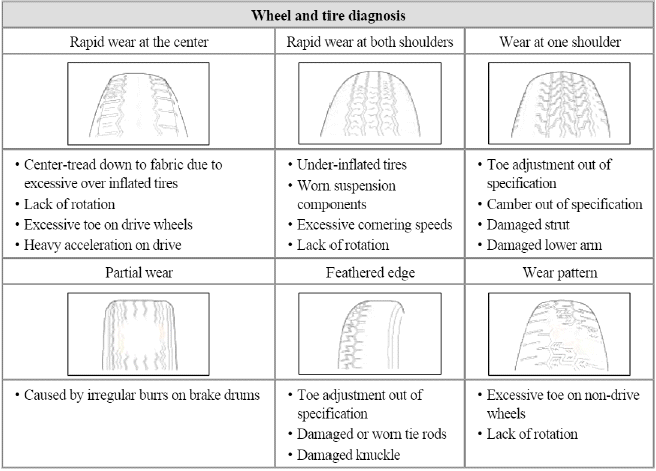
Careful attention must be paid to the the and wheels. There are several symptoms that can be caused by damaged or worn tire and wheels. Perform a careful visual inspection of the tires and wheel assemblies. Spin the tires slowly and watch for signs of lateral or radial runout. Refer to the tire wear chart to determine the tire wear conditions and actions.
READ NEXT:
 Components and Components Location | Front Strut Assembly
Components Location
Front axle
Front lower arm
Drive shaft
Stabilizer bar
Steering gearbox
Sub frame
Front strut assembly
Front Strut Assembly
Componen
SEE MORE:
Repair procedures
Refrigerant System Service Basics
Refrigerant Recovery
Use only service equipment that is U.L-listed and is certified to meet the
requirements of SAE J2210 to remove
4FC-134a(R-134a) from the air conditioning system.
CAUTION
Air conditioning refrigerant or lubricant vapor can irritat
Fuel Tank
Repair procedures
Removal
1. Release the residual pressure in fuel line (Refer to "Release Residual
Pressure in Fuel Line" in this group).
2. Remove the rear seat cushion (Refer to "Seat" in BD group).
3. Remove the fuel pump service cover (A).
4. Disconnect the fuel рumр connector
Content
- Home
- Kia Sportage - Fifth generation (NQ5) - (2022-2026) - Owner's Manual
- Kia Sportage - Second generation (JEKM) (2005-2015) - Body Workshop Manual
- Kia Sportage Third generation (SL) - (2011-2016) - Service and Repair Manual
- Sitemap
- Top articles
