Kia Sportage: Schematic Diagrams, Repair procedures | Positive Crankcase Ventilation (PCV) Valve
Schematic Diagrams
Schematic Diagram
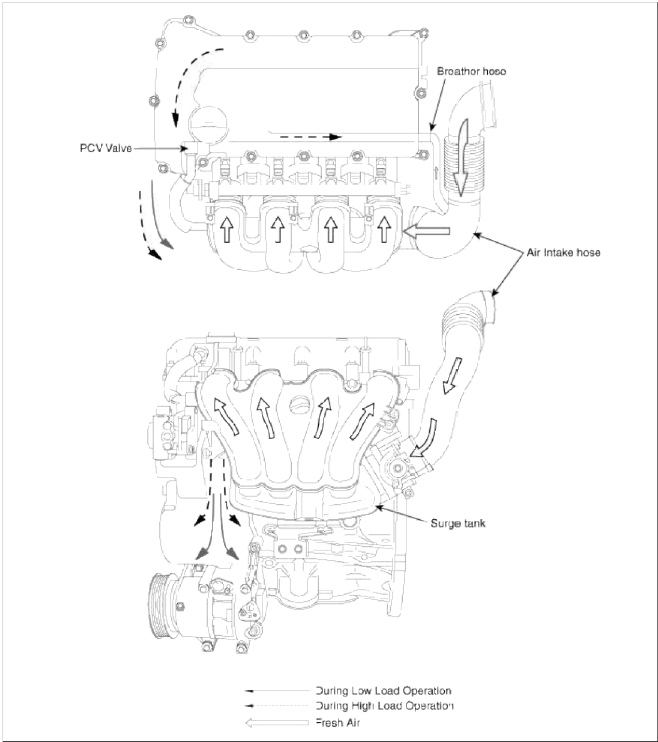
Repair procedures
Inspection
1. After disconnecting the vapor hose from the PCV valve, remove the PCV valve.
2. Reconnect the PCV valve to the vapor hose.
3. Run the engine at idle, then put a finger over the open end of the PCV valve and make sure that intake manifold vacuum can be felt.
NOTE
The plunger inside the PCV valve will move back and forth at vacuum.
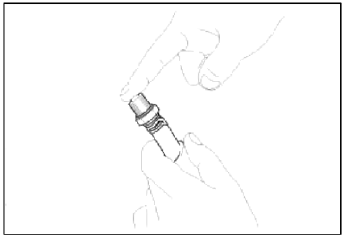
4. If the vacuum is not felt inspect PCV operation, if operating correctly clean or replace the vapor hose.
Positive Crankcase Ventilation (PCV) Valve
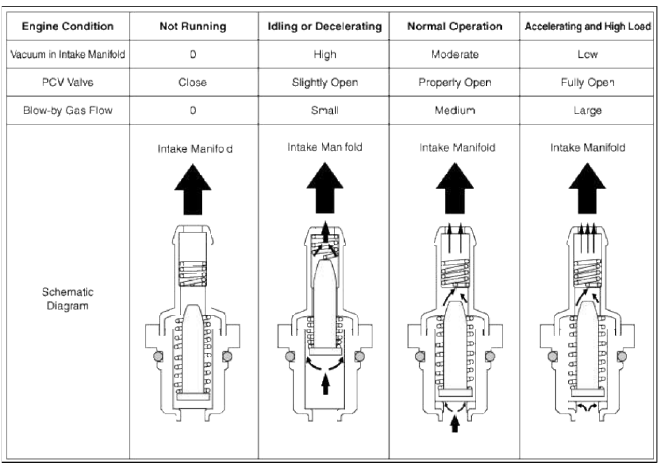
Description and Operation
Operation Principle
Repair procedures
Removal
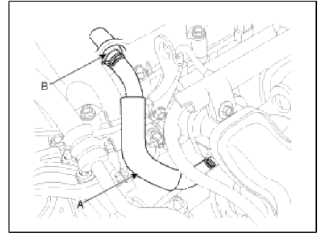
1. Disconnect the vapor hose (A).
2. Remove the PCV valve (B).
Inspection
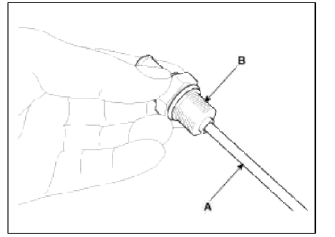
1. Insert a thin stick (A) into the PCV valve (B) from the threaded side to check that the plunger movement.
NOTE
If the plunger does not move (PCV valve is clogged), clean or replace the valve.
Installation
1. Installation is reverse of removal.
PCV Valve installation:
1.9 ~ 2.8 N.m (0.19 ~ 0.29 kgf.m, 1.4 ~ 2.1 lb-ft)
READ NEXT:
 Description and Operation, Schematic Diagrams
Description and Operation
Description
The Evaporative Emission Control System prevents fuel vapor stored in fuel
tank from vaporizing into the
atmosphere. When the fuel evaporates in the fu
SEE MORE:
ICM (Integrated Circuit Module) Relay Box
Components and Components Location
Component
Pin Information
Rear wiper motor
(Power)
IPM
Stop lamp
-
ESC unit
U_H_Box (ABS 7.5A
fuse)
Stop lamp switch
Stop lamp 10A fuse
-
-
IPM (Rear wiper 15 A)
Rear wiper motor
(Signal)
-
-
GND
IPM (BCM)
IPM (Do
Back View Camera System
Components and Components Location
Component Location
Back view camera
ECM mirror
Schematic Diagrams
Circuit Diagram
Back view camera connector
Power
Video (+)
Ground
Video (-)
Description and Operation
Description
Back view camera will activate wh
Content
- Home
- Kia Sportage - Fifth generation (NQ5) - (2022-2026) - Owner's Manual
- Kia Sportage - Second generation (JEKM) (2005-2015) - Body Workshop Manual
- Kia Sportage Third generation (SL) - (2011-2016) - Service and Repair Manual
- Sitemap
- Top articles
