Kia Sportage: Components and Components Location | Relay Box (Engine Compartment)
Component Location
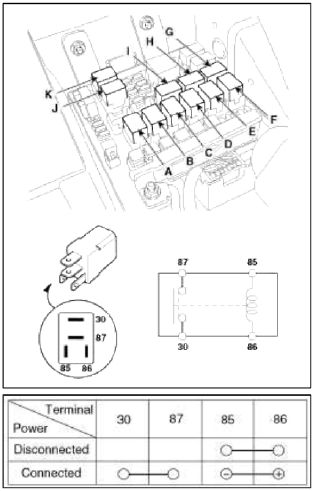
[Engine Room Relay Box]
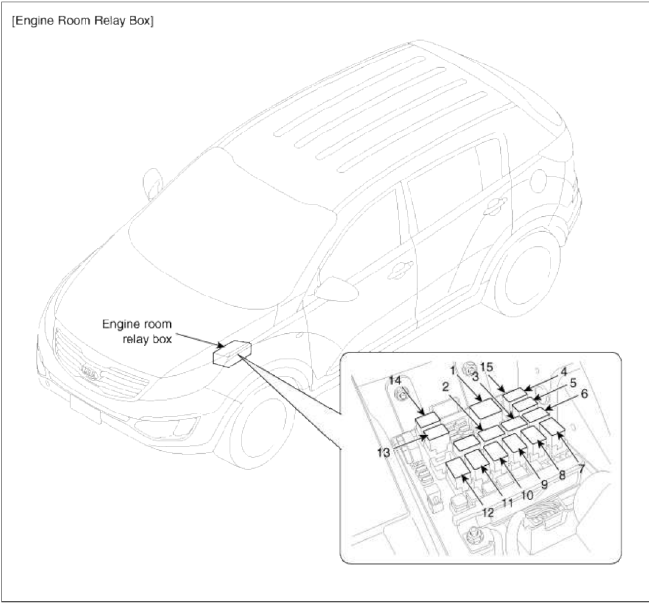
- Main relay
- Cooling fan relay (High)
- Windshield deicer relay
- Wiper relay (High)
- Wiper relay (Low)
- ATM relay
- Rear glass defogger relay
- Burglar horn relay
- Start relay
- Cooling fan relay (Low)
- Horn relay
- Blower relay
- Ð/С relay
- Fuel pump relay
- Quick braking warning system relay
[Passenger Compartment Relay]
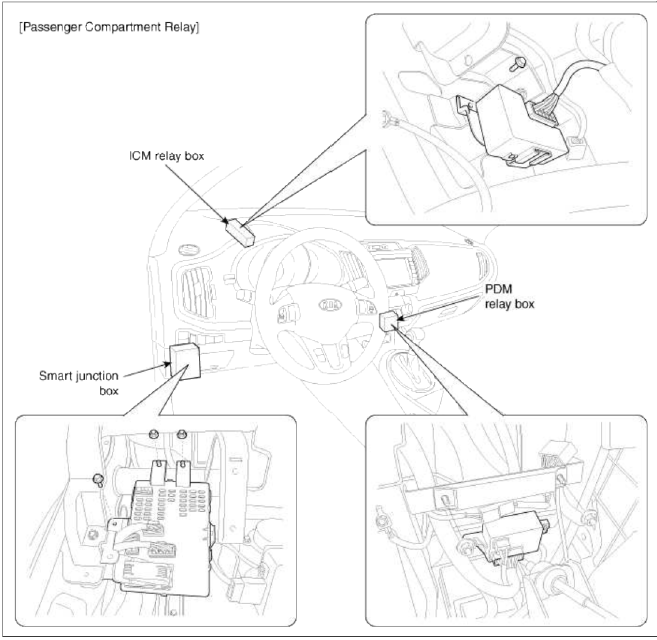
- ICM relay : Rear wiper relay, DBC (Downhill Brake Control) relay
- PDM relay : ACC relay, IG1 relay, IG2 relay
Relay Box (Engine Compartment)
Components and Components Location
Component Location
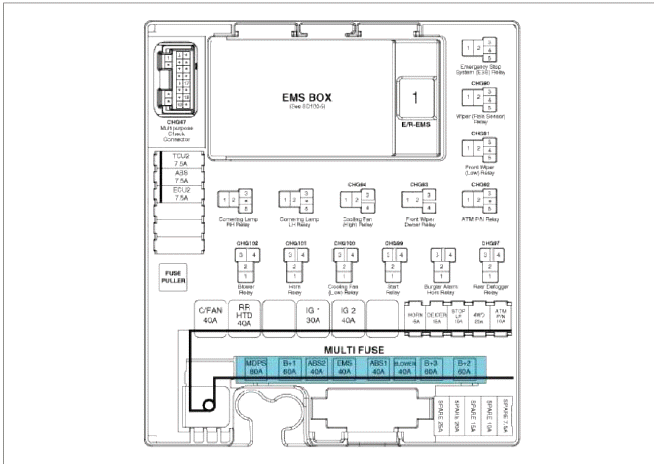
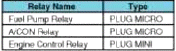
Relay Type
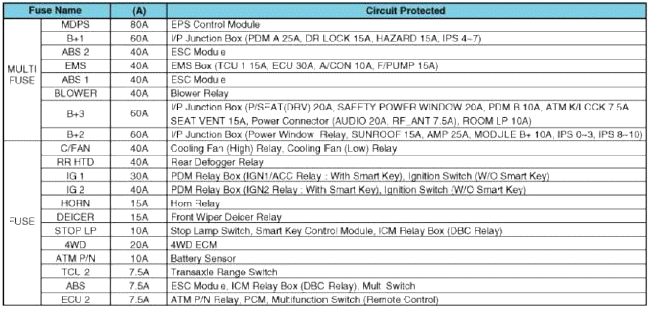
 USE THE DESIGNATED FUSE AND RELAY ONLY
Circuit (E/R Fuse & Relay Box)
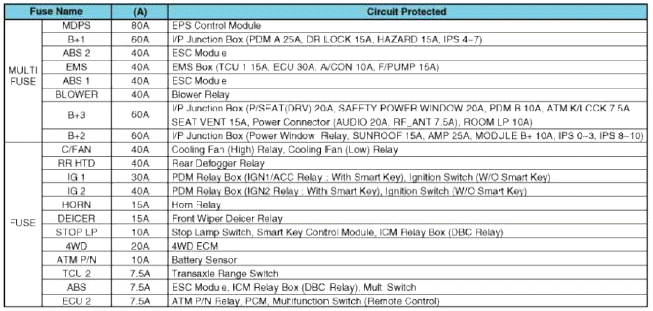
USE THE DESIGNATED FUSE AND RELAY ONLY
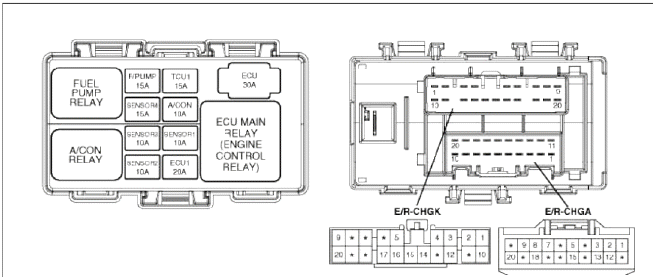
Relay Type
Circuit (EMS Box)
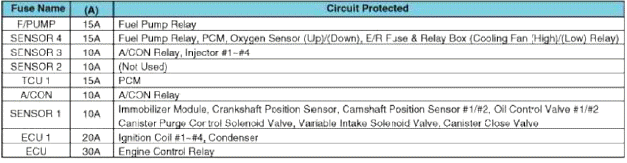
USE THE DESIGNATED FUSE AND RELAY ONLY
Repair procedures
Inspection
1. Disconnect the negative (-) battery terminal.
2. Pull out the relay from the engine compartment relay box
Power Relay (Type A)
Check for continuity between the terminals.
- Blower relay
- Horn relay
- Cooling fan relay (Low)
- Start relay
- Burglar horn relay
- Rear glass defogger relay
- ATM relay
- Windshield deicer relay
- Cooling fan relay (High)
- Ð/С relay
- Fuel pump relay
1. There should be continuity between the No.30 and No.87 terminals when power and ground are connected to the No.85 and No.86 terminals.
2. There should be no continuity between the No.30 and No.87 terminals when power is disconnected.
Power Relay (Type B)
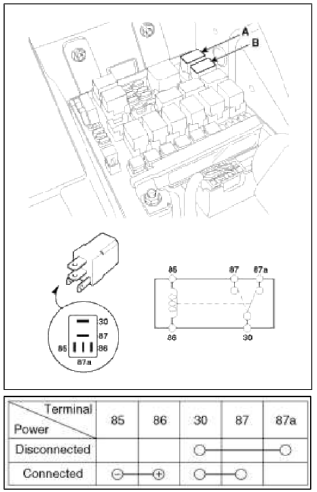
Check for continuity between the terminals.
- Wiper relay (High)
- Wiper relay (Low)
1. There should be continuity between the No.30 and No.87 terminals when power and ground are connected to the No.85 and No.86 terminals.
2. There should be continuity between the No.30 and No.87 terminals when power is disconnected.
Power Relay (Type C)
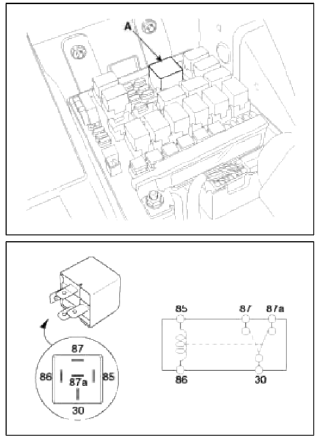
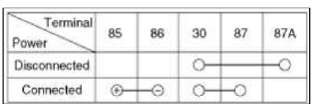
Check for continuity between the terminals.
- Main relay
1. There should be continuity between the No.30 and No.87 terminals when power and ground are connected to the No.85 and No.86 terminals.
2. There should be no continuity between the No.30 and No.87 terminals when power is disconnected.
Fuse
1. Be sure there is no play in the fuse holders, and that the fuses are held securely.
2. Are the fuse capacities for each circuit correct? 3. Are there any blown fuses?
If a fuse is to be replaced, be sure to use a new fuse of the same capacity. Always determine why the fuse blew first and completely eliminate the problem before installing a new fuse.
Multi Fuse
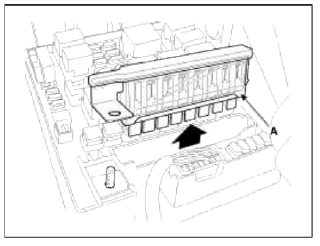
NOTE
- Multi fuse (A) is needed to replace in the mass when it damaged only one fuse.
- When replace the multi fuse, refer to the "Engine compartment - component location" diagram exactly.
- Use the multi fuse capacities for each circuit correctly.
READ NEXT:
 Relay Box (Passenger Compartment)
Components and Components Location
Component Location
USE THE DESIGNATED FUSE AND
RELAY ONLY
Circuit (I/P Junction Box)
USE THE DESIGNATED FUSE AND
RELAY ONLY
Description and
Ope
ICM (Integrated Circuit Module) Relay Box
Components and Components Location
Component
Pin Information
Rear wiper motor
(Power)
IPM
Stop lamp
-
ESC unit
U_H_Box (ABS 7.5A
fuse)
Stop lamp switch
Stop lamp 10A fu
SEE MORE:
Specifications, Consumer information and Reporting safety defects
Dimensions
Engine
Gross vehicle weight
Luggage volume
Min: Behind rear seat
Max: Behind front seat
Air conditioning system
Please contact a professional workshop for more details.
Contact an authorized Kia dealer.
Bulb wattage
* : if equipped
Inspection - Repair procedures
Connecting Rod
1. Check the connecting rod end play.
Using a feeler gauge, measure the end play while moving the connecting rod back
and forth.
End play:
Standard : 0.10 ~ 0.25mm (0.0039 ~ 0.0098in.)
Limit: 0.35mm (0.0138in.)
If out-of-tolerance, install a new connecting rod.
If sti
Content
- Home
- Kia Sportage - Fifth generation (NQ5) - (2022-2026) - Owner's Manual
- Kia Sportage - Second generation (JEKM) (2005-2015) - Body Workshop Manual
- Kia Sportage Third generation (SL) - (2011-2016) - Service and Repair Manual
- Sitemap
- Top articles
