Kia Sportage: Repair procedures | Components and Components Location
Component Replacement After Deployment
NOTE
Before doing any SRS repairs, use the GDS Pro to check for DTCs. Refer to the Diagnostic Trouble Code list for repairing of the related DTCs.
When the front airbag(s) deployed after a collision, replace the following items.
- SRSCM
- Deployed airbag(s)
- Seat belt pretensioner(s)
- Front impact sensors
- SRS wiring harnesses
- Inspect the clock spring for heat damage.
If any damage found, replace the clock spring.
When the side/curtain airbag(s) deployed after a collision, replace the following items.
- SRSCM
- Deployed airbag(s)
- Side impact sensor(s) for the deployed side(s)
- SRS wiring harnesses
After the vehicle is completely repaired, confirm the SRS airbag system is OK.
- Turn the ignition switch ON; the SRS indicator should come on for about six seconds and then go off.
Components and Components Location
Components
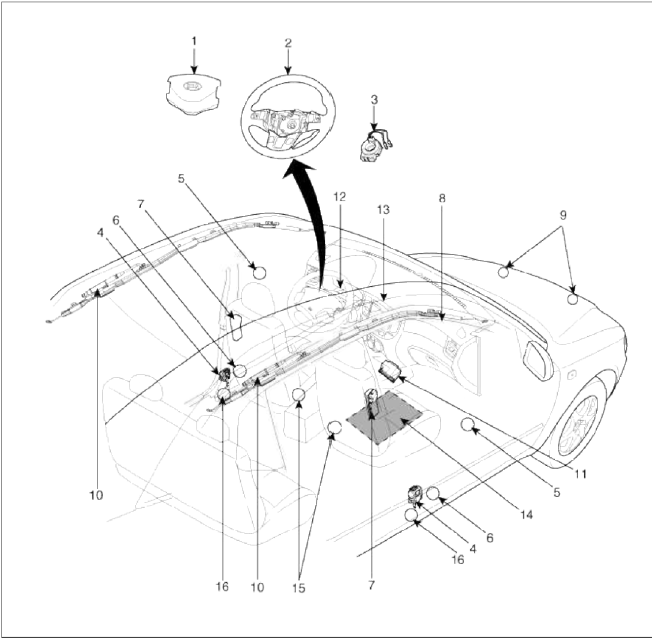
- Driver Airbag (DAB)
- Steering Wheel
- Clock Spring
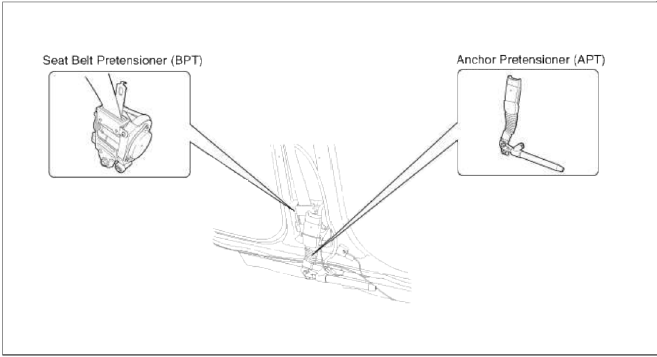
- Seat Belt Pretensioner (BPT)
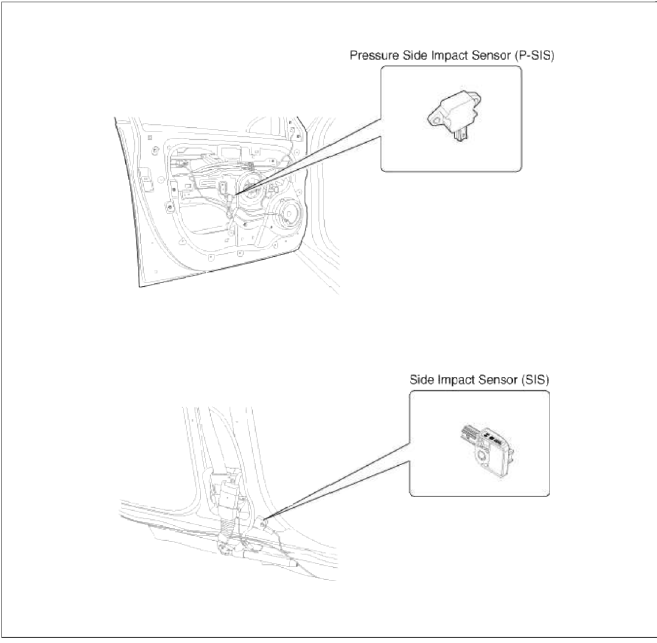
- Pressure Side Impact Sensor (P-SIS)
- Side Impact Sensor (SIS)
- Side Airbag (SAB)
- Passenger Airbag (PAB)
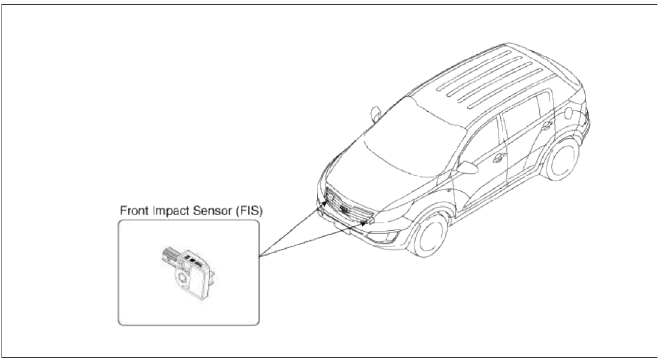
- Front Impact Sensor (FIS)
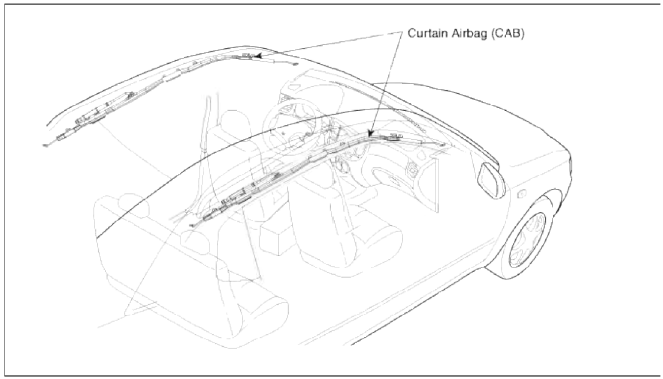
- Curtain Airbag (CAB)
- Supplemental Restraint System Control Module (SRSCM)
- Airbag Warning Lamp
- Telltale Lamp
- Passenger Occupant Detecting System (PODS)
- Belt Tension Sensor
- Anchor Pretensioner (APT)
Components Location
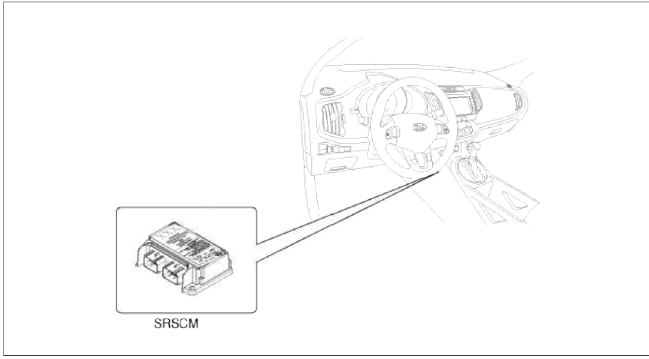
Supplemental Restraint System Control Module (SRSCM)
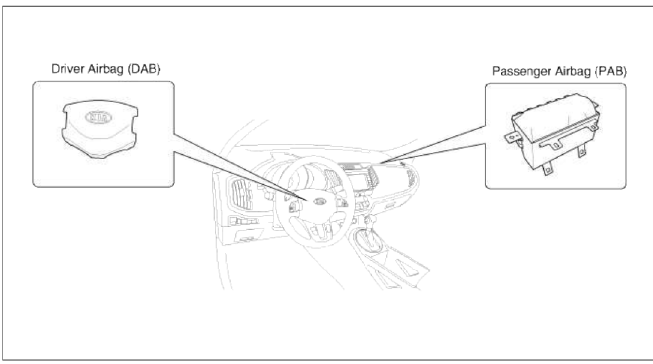
Driver Airbag (DAB) / Passenger Airbag (PAB)
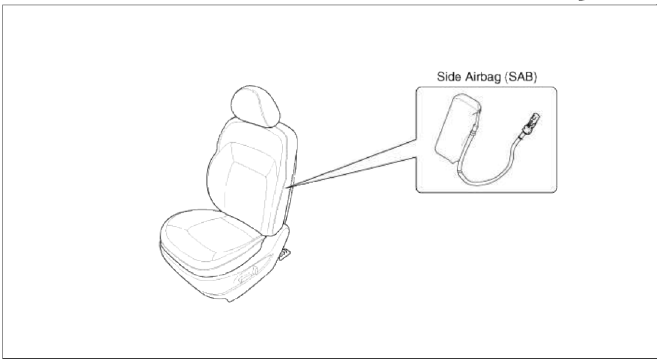
Side Airbag (SAB)
Curtain Airbag (CAB)
Seat Belt Pretensioner (BPT)/ Anchor Pretensioner (APT)
Front Impact Sensor (FIS)
Side Impact Sensor (SIS)
READ NEXT:
 SRS Control Module (SRSCM)
Description and Operation
Description
The primary purpose of the SRSCM (Supplemental Restraints System Control
Module) is to discriminate between
an event that warrants restraint system dep
SEE MORE:
Climate control air filter
Filter inspection
The climate control air filter should be
replaced according to the maintenance
schedule. If the vehicle is operated in
severely air-polluted cities or on dusty
rough roads for a long period, it should
be inspected more frequently and
replaced earlier. When you replace the
c
Auto stop
Idle Stop and Go (ISG) system
The Idle Stop and Go (ISG) system
reduces fuel consumption by automatically
shutting down the engine when the
vehicle is at a standstill. (For example:
red light and traffic jam)
The engine starts automatically as soon
as the starting conditions are met.
The I
Content
- Home
- Kia Sportage - Fifth generation (NQ5) - (2022-2026) - Owner's Manual
- Kia Sportage - Second generation (JEKM) (2005-2015) - Body Workshop Manual
- Kia Sportage Third generation (SL) - (2011-2016) - Service and Repair Manual
- Sitemap
- Top articles
